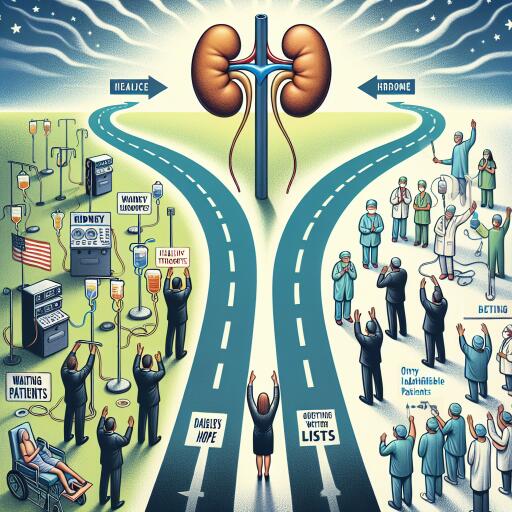
America Just Hit a Kidney Transplant Turning Point
A troubling decline in deceased donations is slowing life-saving procedures, and the reasons behind it reveal a broken trust system.
In 2025, the United States recorded 28,377 kidney transplants, down 116 from the year before. While that reduction may seem small, it translates to 116 patients missing the chance for a life-extending organ. The decline was driven primarily by fewer deceased-donor kidneys, which make up about three-quarters of donations. Living donor kidneys rose, but not enough to offset the loss. More troubling than the numbers themselves is what’s driving the decline: a eroding public trust in the donation system.
Public confidence in organ donation matters now more than ever. The decline is being described not as a failure of medicine but as a signal that people-questioning the donation process are opting out at higher rates. This shift threatens to slow what has been a historically steady stream of kidneys reaching patients in need.
The decline began to show in the middle of 2025. Through early 2025, transplant levels were stable; the numbers fell noticeably around June. The timing aligned with regulatory changes after officials disclosed that organ donations could be authorized for patients still showing signs of life. That disclosure prompted tighter oversight, including decertifications of some organ-procurement groups, and a wave of media coverage about individual cases. One widely reported incident involved a person declared dead for organ procurement but whose heart was still beating, a scenario that sparked public alarm.
The heightened scrutiny appears to have unsettled participants across the system. Rather than galvanizing confidence, the environment has contributed to hesitation among donors, families, and institutions at a moment when more deceased donations are critical. A troubling consequence emerged: thousands were removed from organ donation lists in August 2025 alone.
Impact on real lives is tangible. More than 100,000 people sit on organ waiting lists, with about 94,000 waiting specifically for kidneys. Some die waiting, underscoring the urgent need to maintain a strong donor pipeline and reliable access to organs for those in dire need.
The people and organizations responsible for procuring organs appear to have grown more conservative as scrutiny intensified. This caution, while understandable in light of heightened accountability, directly reduces the number of organs available for transplantation and translates into longer waits for recipients.
At the core is a fragile national system built on a partnership among organ-procurement organizations, the federal government, the national organ-sharing network, and hospitals. Its effectiveness depends on public participation and trust. When confidence collapses, the whole system falters.
Industry groups acknowledged the problem and described the decline as alarming, pointing to collapsing public trust driven by misinformation and confusion about how organ donation works and the roles of different stakeholders. In other words, confusion about the system itself is driving people away from participation.
The stakes are real and existential. Legitimate questions about procurement deserve investigation and regulation, but when they become tangled with misinformation, the public stops participating—and lives are lost as a consequence.
Both the watchdogs and the procuring organizations are urging unity: all stakeholders—from organ-procurement groups to hospitals and regulators—must join forces to restore public trust and strengthen a system that has supported millions of Americans and their families. Restoring confidence will require transparency, accountability, and broad participation, backed by carefully targeted education about how donation actually works. It also calls for steady federal oversight that can address real problems without triggering panic. The urgency is clear: every month with suppressed transplant activity costs lives.
Leave a Reply